
What to Know Before Introducing Solids
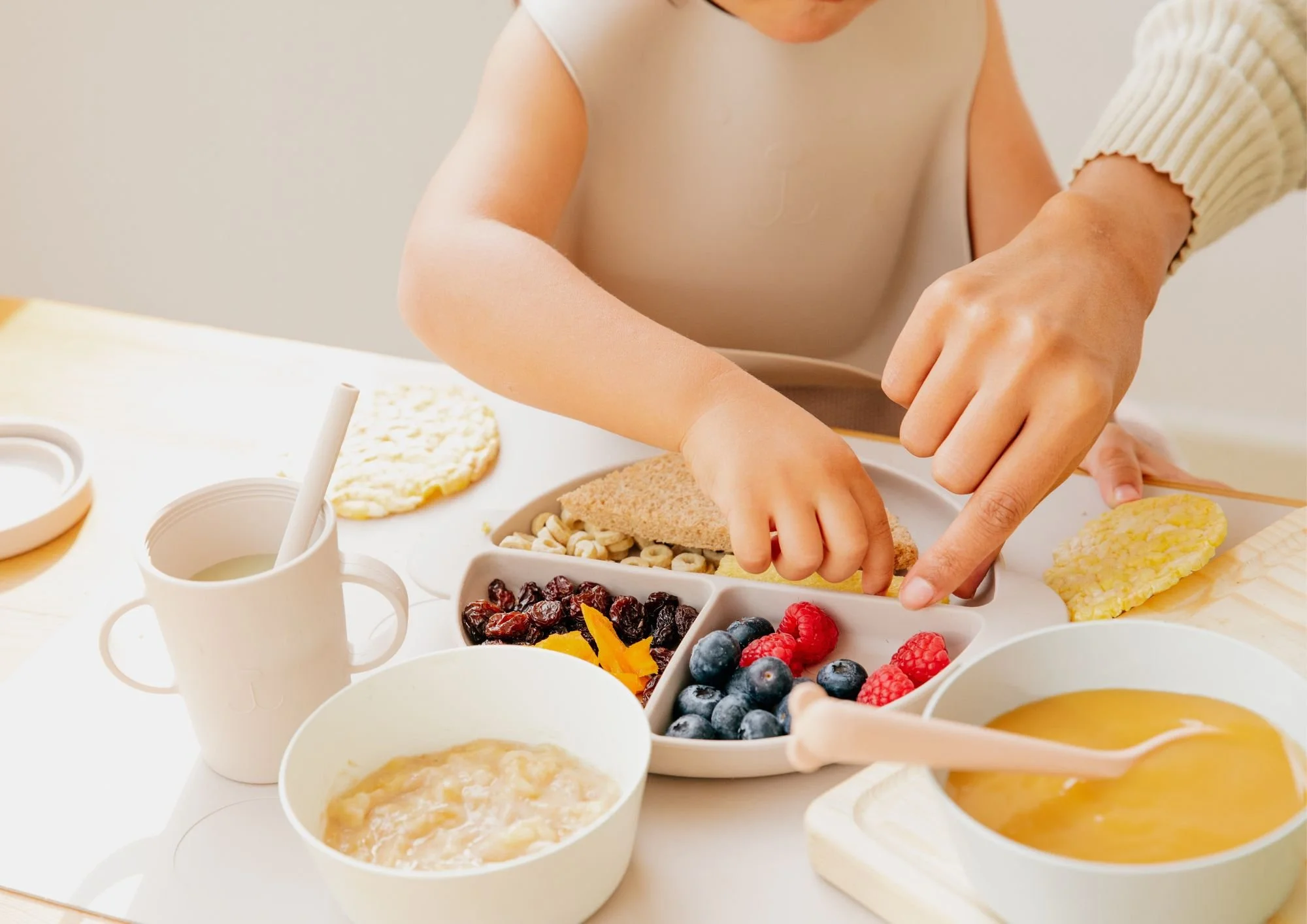
Starting solid foods can be daunting for the family. Up to 40% of infants and toddlers are reported to have feeding difficulties.¹ There are many conscious choices from the environment to posture and smells. In this article we’ll break it down into our top items that we want you to know before introducing solids.
1. When to Identify They’re Ready
For parents they often find the six month mark is approaching and can feel almost a countdown to start transitioning to solids. From four months, you want to be looking to see that you’re child: can sit upright with minimal support and hold their head up, can turn their head from side to side, showing an interest in food by reaching for it and showing an interest when others eat e.g. opening their mouth when you chew. If your child is not meeting these landmarks, it may be beneficial to seek support from your GP or a health professional to assess introducing foods safely.
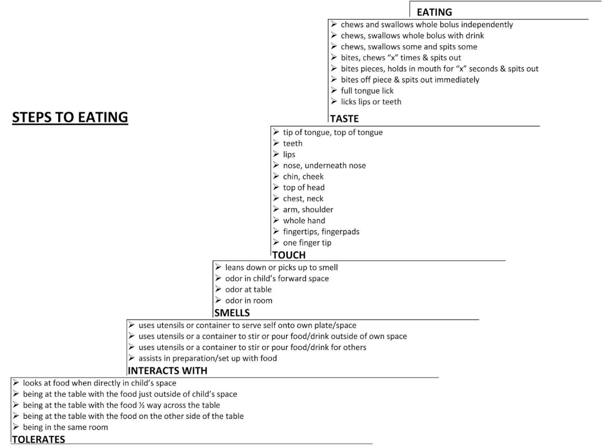
2. The Food Step Ladder
An analogy I share with parents is: Imagine I put a plate of purple goop in front of you and told you to eat it – would you? The answer is probably ‘no’. But, you may start by smelling it, touching it, then licking it. This shows the small, often unseen steps that kids are taking to feel comfortable eating new foods.
3. Division of Responsibility
It may be frustrating when you put down the meal and your child refuses. I have some parents describe that they feel like a failure. A model that helps define your role when it comes to feeding is the Division of Responsibility – the parent decides what, where and when, and the child chooses if and how much. Parents pick the meal, where it is served and at what time. The child decides whether it wants to eat and how much. This can take a lot of pressure off new parents that yes, feeding is important, but not 100% is within your control.
4. Importance of Posture
There are numerous factors that go into feeding time including distractions from pets and tablets. One that is often overlooked is posture and support. Some children and conditions can exert a lot of energy by simply sitting upright, leaving them exhausted and uninterested in eating. Other health professionals such as an occupational therapist are great to involve at this time, possibly suggesting chairs with harnessing for extra support.
5. Perseverance is Key
Did you know that for children up to two years old it can take 5-10 times to trust a food. For children up to four years, it’s closer to 10-15 tries. And often takes a further 10-15 times before the food is liked.¹ Overall, depending on your child’s age, it could take up to 30 times before they begin to like a certain food. It can be helpful to remind children of this in a calm and neutral manner e.g. “scientists say it may take up to 10 times before you like this food.” It’s important to note that neurodivergent children experience this differently due to taste and texture sensitivities, however, repeated exposure is still encouraged.
6. Iron Rich Sources
The baby food market is flooded with iron-fortified foods including rice cereals. These fortified foods may be limited in other nutrients where natural food sources thrive. An example of this is sauteed and pureed liver, which can be added to other foods to enrich the nutrient content.
7. Online Resources We Trust
If you’re interested in further ideas like the one above, some evidence-based resources we recommend are: Boob to Food, Solid Starts, and Growing Intuitive Eaters – all on social media, and the Solid Starts: Baby First Foods app.
Our Accredited Practising Dietitians can help with further support for nutrition and introducing solids safely.
Resources used:
1. Howard, A.J., Mallan, K.M., Byrne, R., Magarey, A., & Daniels, L.A. (2012). Toddlers’ food preferences: The impact of novel food exposure, maternal preferences and food neophobia. Appetite, 59(3), 818-8125. https://doi.org/10.1016/j.appet.2012.08.022